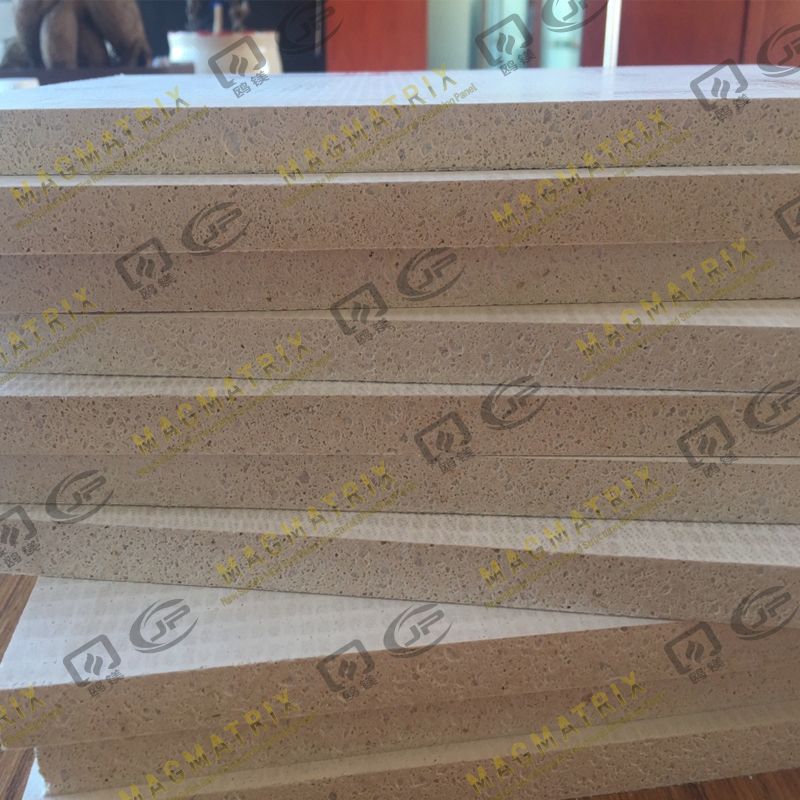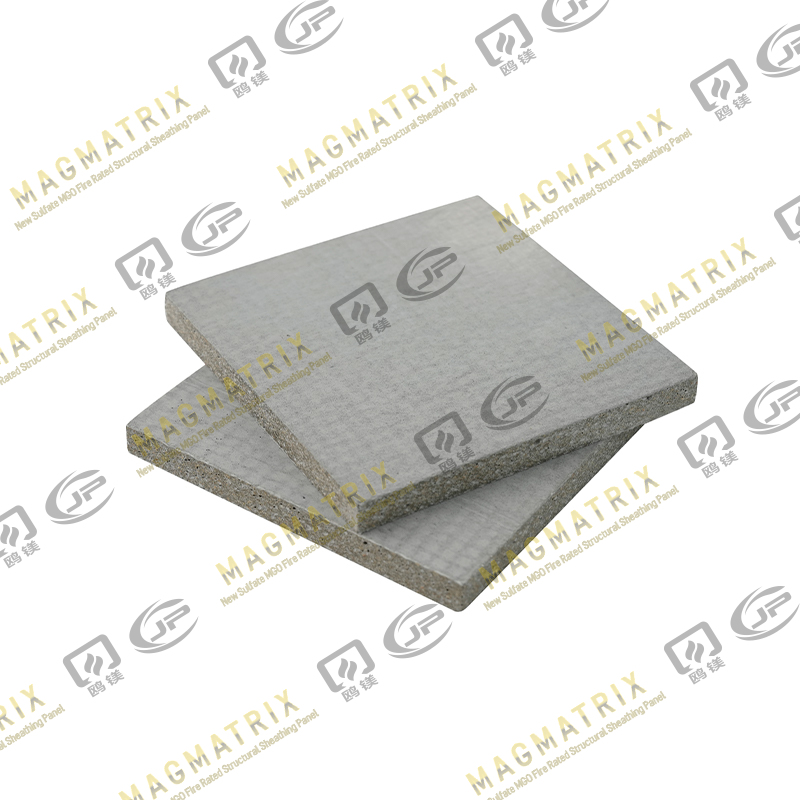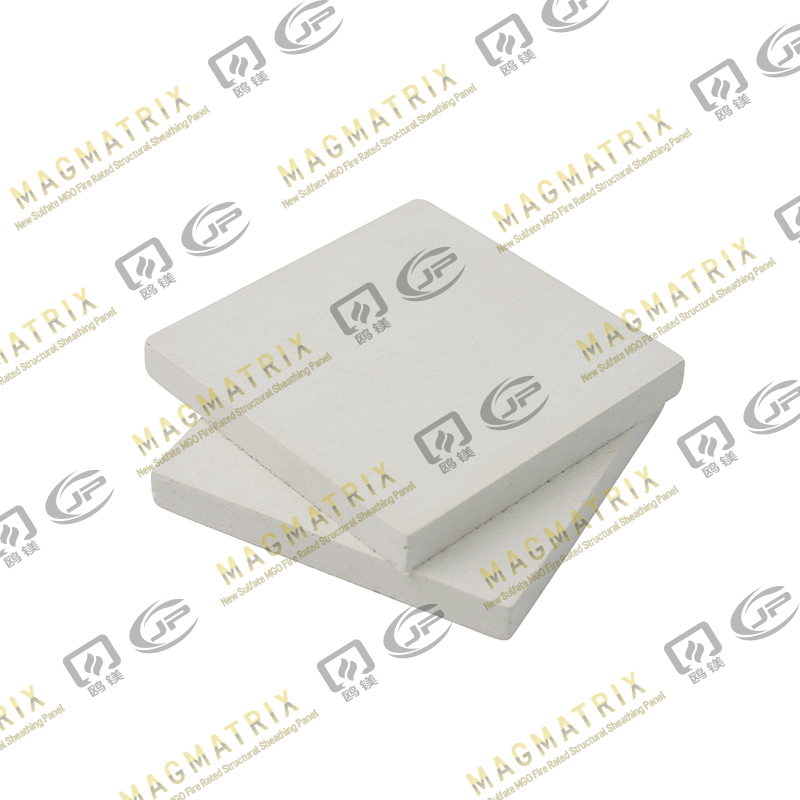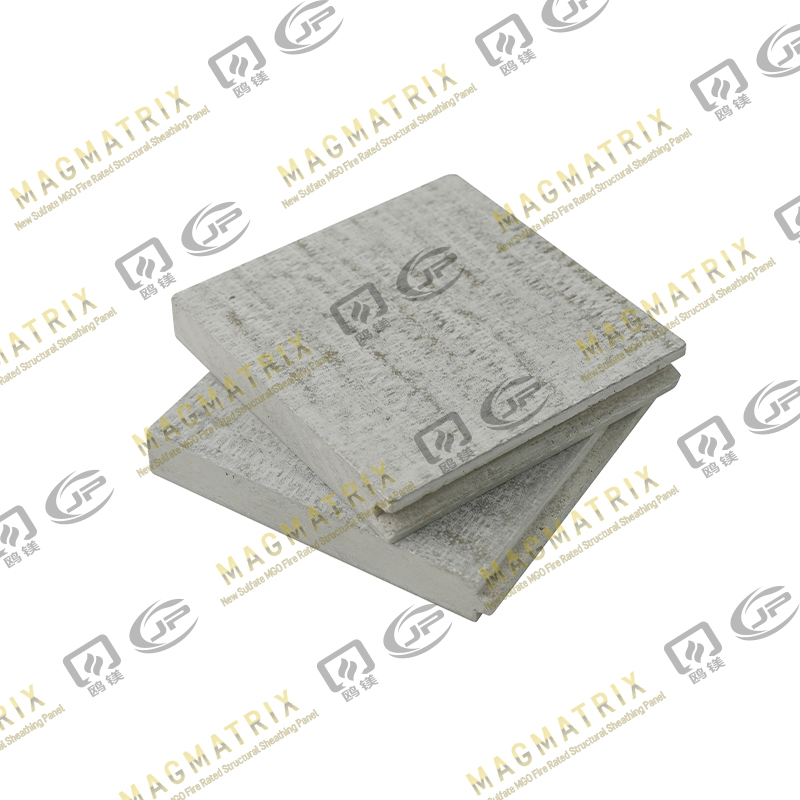

What Sets Sulfate MGO Board Apart
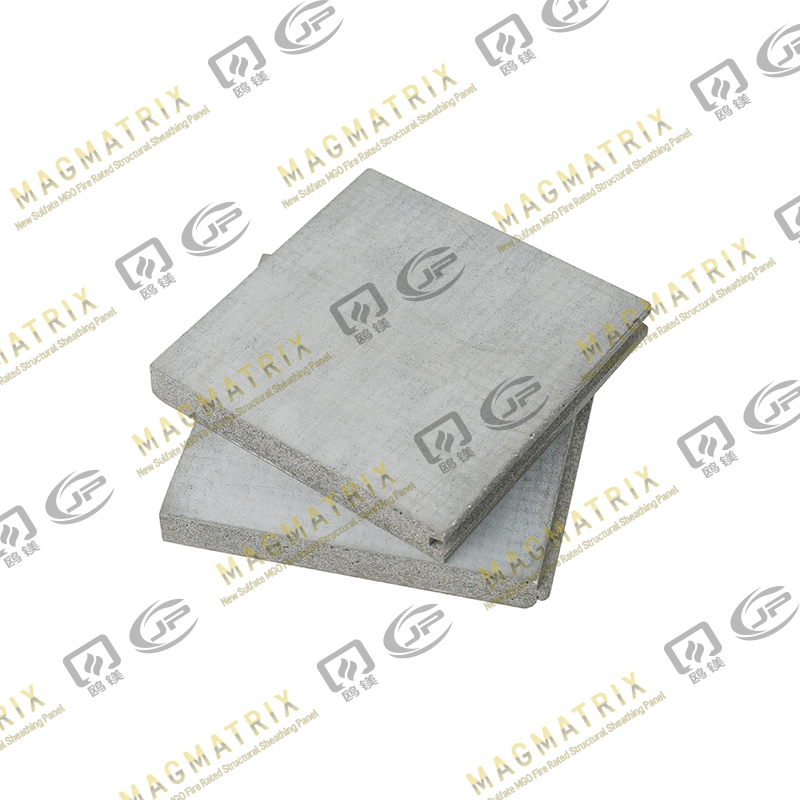
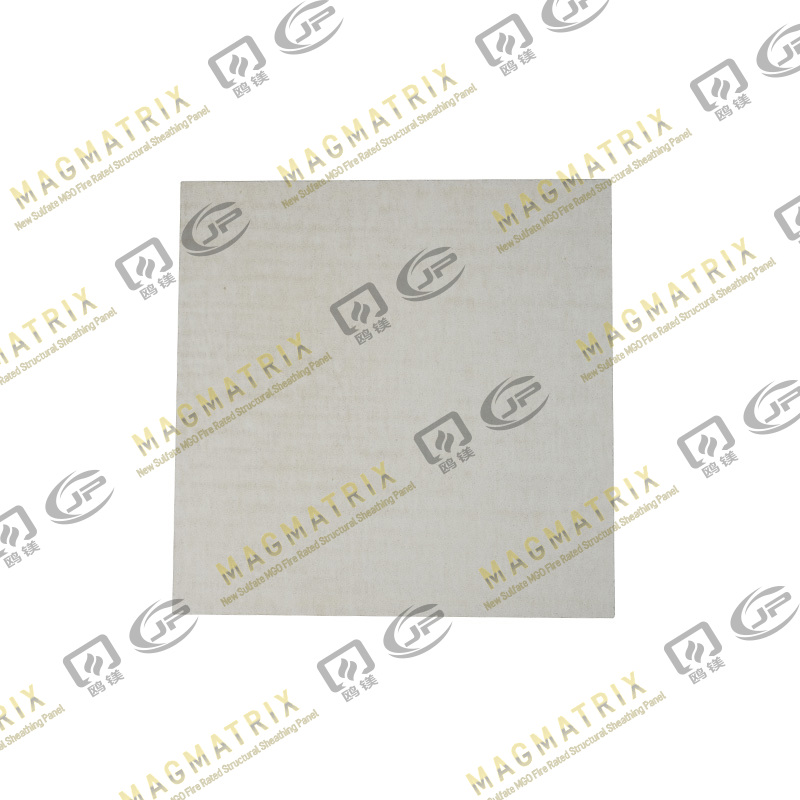
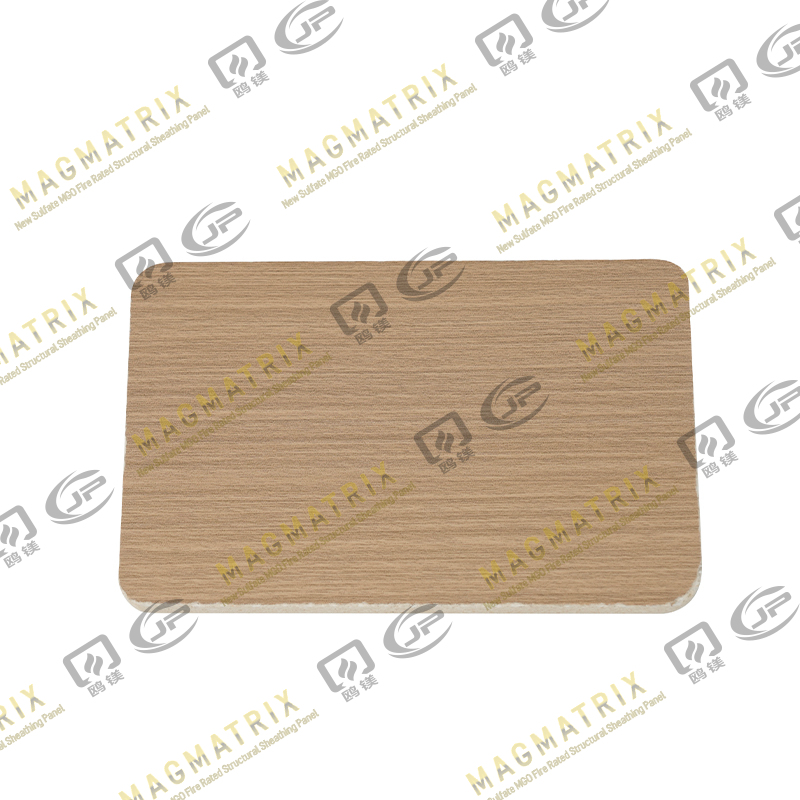
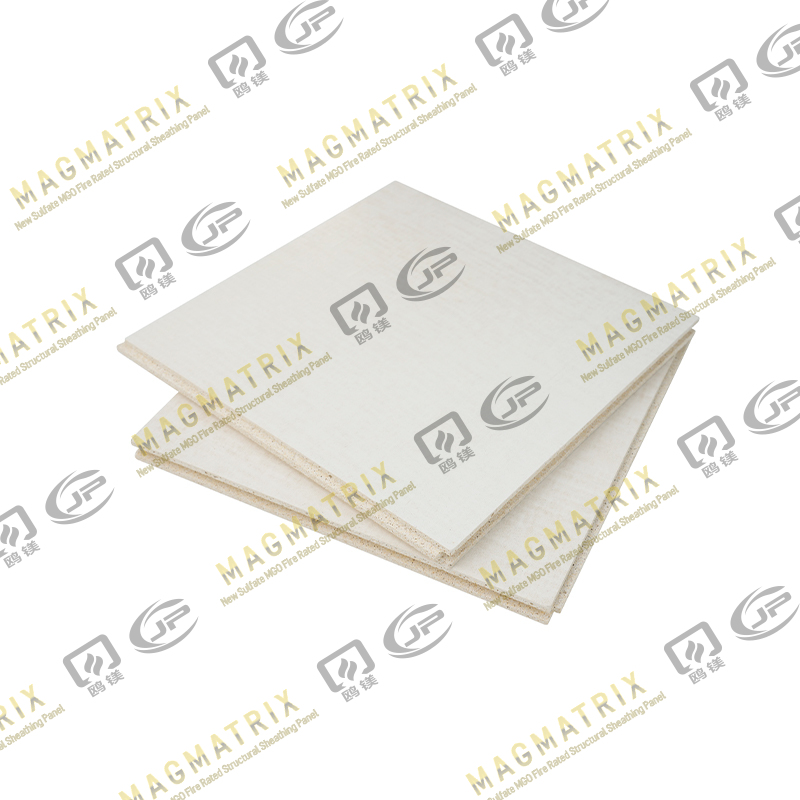
Most magnesium oxide panels on the market still use magnesium chloride as the secondary binder. 에이 Sulfate MGO Board swaps that chloride for magnesium sulfate instead, and the change isn't cosmetic — it rewrites how the panel behaves once it's in a wall or under a floor.
Composition-wise, the two board types look similar on paper: roughly 56-58% magnesium oxide, 3-4% perlite, 4-6% fiberglass mesh, and 5-6% wood fiber. The gap shows up in the second-largest ingredient. Chloride-based boards run around 27-29% magnesium chloride, with dissolvable chloride content as high as 5% and, in poorly manufactured versions, up to 40%. 적절하게 공식화된 Magnesium Oxide Sulfate Board replaces that chloride with 27-29% magnesium sulfate, and its dissolvable chloride content typically stays under 1%.
That single swap eliminates the chemistry behind "weeping boards" — the surface moisture and salt migration that plagues older chloride formulations in humid climates.
Fire Performance Backed by Testing
Sulfate content doesn't change the fire chemistry of the board — magnesium oxide itself is the non-combustible component in both formulations. What matters is whether the panel has actually been tested and certified, not just marketed as fireproof.
The relevant benchmark is ASTM E136, which places test specimens in a vertical tube furnace at 750°C and tracks weight loss, temperature rise, and flaming across four samples. A material passes only if three of the four specimens stay within the allowed limits. Panels that clear this test qualify as genuinely non-combustible under International Building Code requirements for Type I and II construction — a distinction that separates certified sulfate MgO panels from boards that simply resist ignition in casual use.
Alongside E136, ASTM E84 rates surface burning characteristics (flame spread and smoke development), and well-formulated boards typically score Class A on that test. Together, E136 and E84 give architects and code officials documented proof rather than a marketing claim. Ask any supplier for the actual test reports before specifying a panel for a fire-rated assembly — formulation quality varies more than the industry likes to admit.
Moisture and Corrosion Resistance
Chloride ions are hygroscopic — they pull moisture out of the air and hold onto it. In a wall cavity, that means slow but steady corrosion of steel studs, screws, and any metal fastener in contact with the board. Over several years in a humid or coastal climate, this shows up as rust staining, fastener failure, and eventually surface degradation.
A Magnesium Sulfate MGO Board avoids most of this because sulfate is far less reactive with metal than chloride. It doesn't eliminate the need for corrosion-resistant fasteners entirely, but it removes the chronic exposure source that causes long-term weeping and rust bleed. This is one reason sulfate formulations have become the preferred choice for steel-frame construction, where direct board-to-metal contact is unavoidable.
Dimensional stability follows the same logic. Boards with lower dissolvable chloride content show less hydrothermal expansion during freeze-thaw cycling, which reduces the micro-cracking that shows up at joints after a few seasons of temperature swings.
Where It Performs Best
Sulfate formulations show up most often in applications where moisture exposure and metal contact overlap: steel-stud interior partitions, exterior wall sheathing behind cladding, subfloor panels over joists in damp climates, and tile backer in bathrooms or kitchens. Structural insulated panel (SIP) systems also favor sulfate boards, since the panel sits sandwiched against foam and framing with limited ventilation.
Wood-frame construction sees benefits too, though the corrosion advantage is less pronounced since wood fasteners are less prone to the same reaction. The bigger draw there is usually the reduced hydrothermal movement and the absence of surface efflorescence over time.
분명히 언급할 가치가 있는 한 가지 주의 사항은 황산염 함량이 보드를 방수 처리하지 않는다는 것입니다. It's moisture-resistant, not immersion-rated. Exterior applications still need proper flashing, coating, or cladding to keep the panel from prolonged direct water exposure.
Choosing the Right Panel
Not every product labeled "sulfate MgO" performs the same. Density, fiberglass mesh layer count, and bending strength vary significantly between manufacturers, and these differences affect impact resistance and screw-holding capacity more than the sulfate content itself.
Before specifying a panel, request the actual test documentation — ASTM E136 certification, E84 flame spread results, and any third-party bending or racking shear reports. 인증 번호를 첨부하지 않고 "내화성"만을 주장하는 보드가 반드시 독립적인 테스트를 거친 것은 아닙니다.
- 정품 황산염 제제의 용해성 염화물 함량이 1% 미만인지 확인
- Check bending strength and impact resistance ratings, not just the fire rating
- 용도에 맞게 보드 두께를 맞추세요. 바닥 바닥과 외부 덮개에는 일반적으로 내부 칸막이벽보다 밀도가 높은 패널이 필요합니다.
For steel-frame projects, humid climates, or any assembly where long-term corrosion resistance matters more than upfront cost, sulfate-based panels are worth the modest premium over standard chloride boards.